Rebuilding the EU Design Function
Salsify — B2B SaaS E-commerce
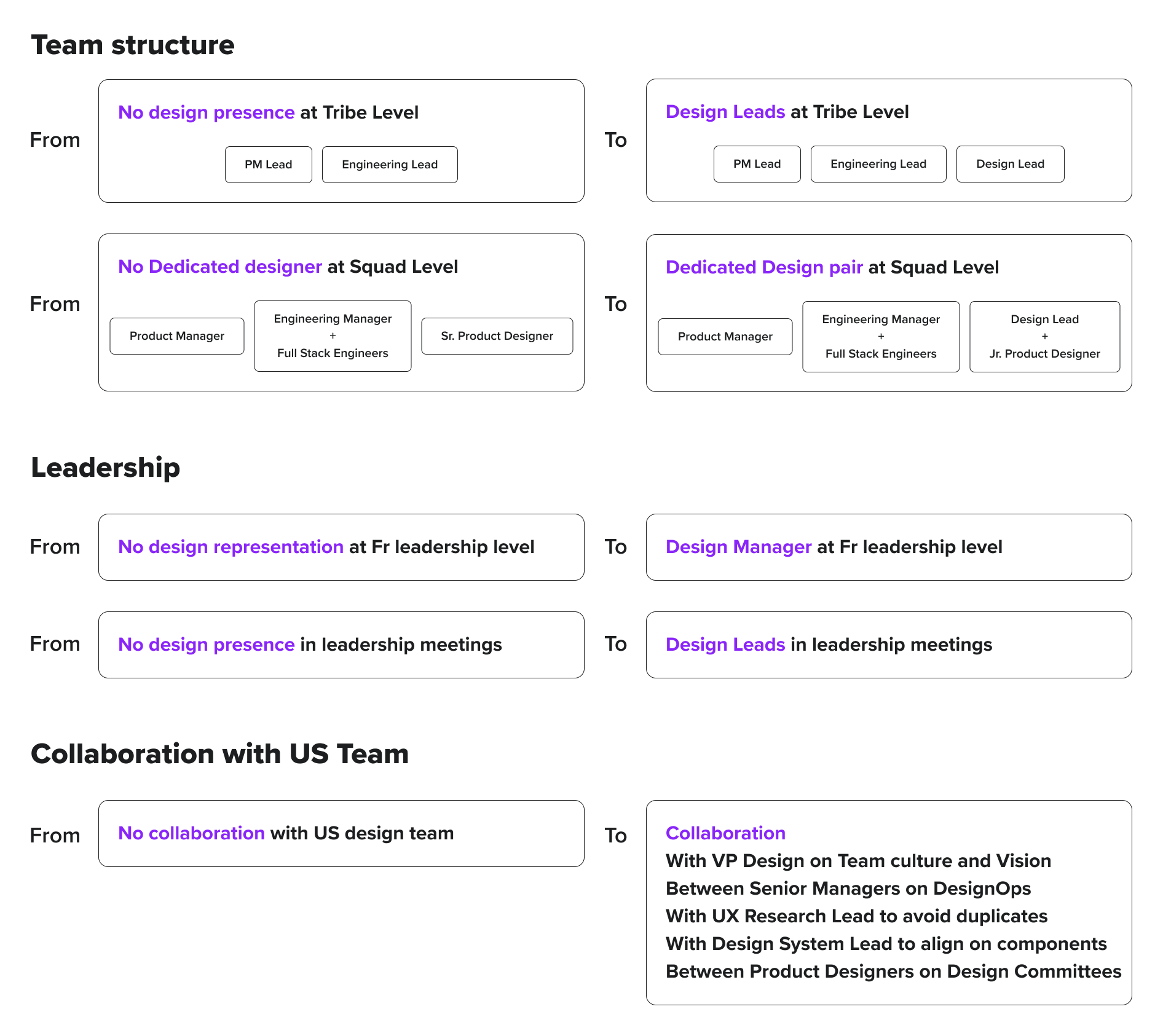
Joined as the first EU Design Manager two months before the entire EU design team departed.
Mandate: rebuild the function while maintaining product delivery and cross-country alignment.
-
4 designers
Hired & onboarded in 12 months.
-
−30%
Ramp-up time vs US benchmark.
-
−40%
Duplicate research.
Context
Salsify operates two SaaS products at different maturity levels: one scaling internationally, one in maintenance mode.
I joined as the first EU Design Manager two months before the entire EU design team departed.
- Product delivery at risk in france due to lack of designers
- Fragmented collaboration with the US team
- No shared methodology or DesignOps infrastructure
Mandate: rebuild the EU design function while maintaining delivery velocity.
Problem Framing
The surface problem was headcount.
The structural issue was the absence of operational foundations.
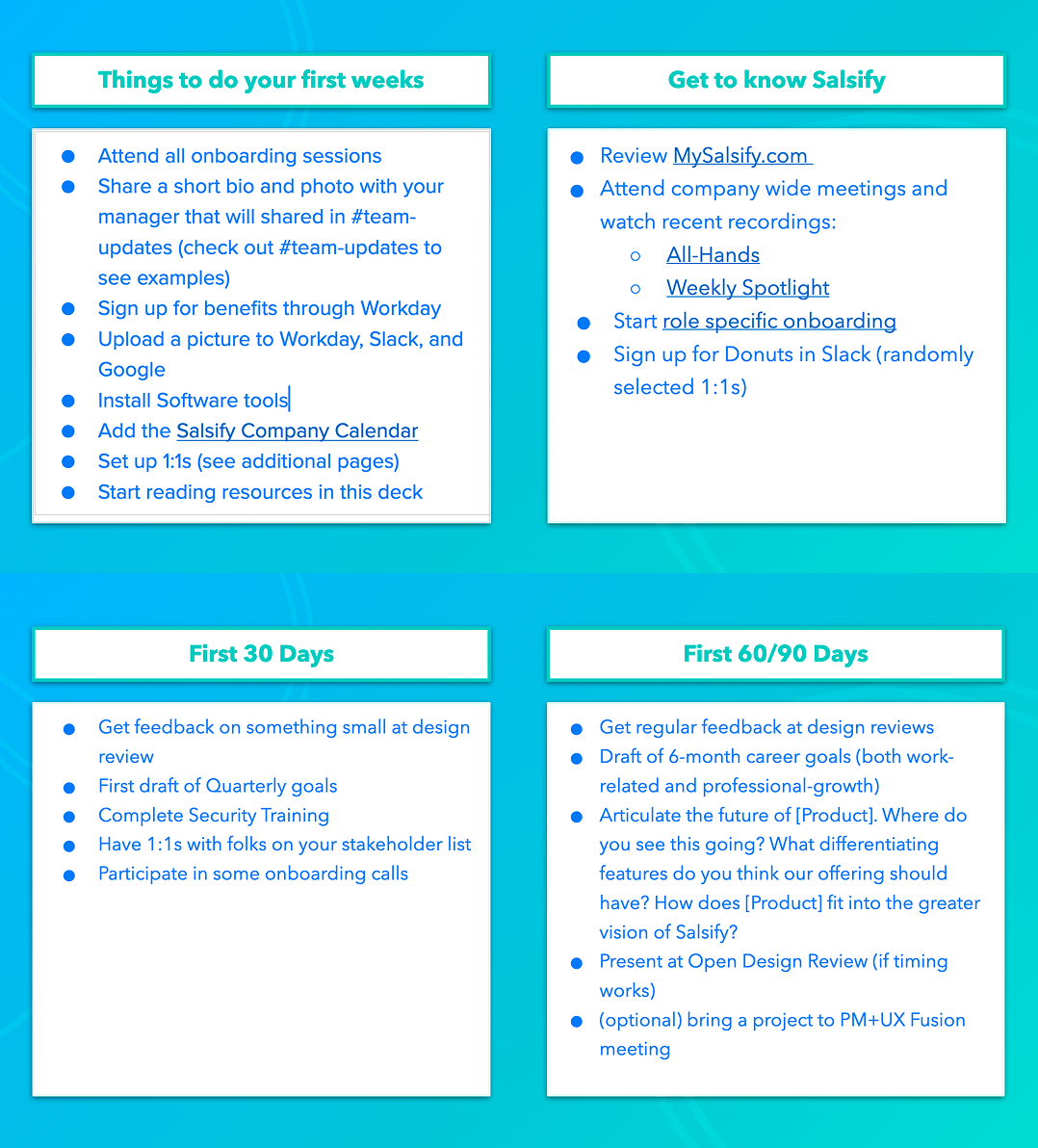
- No Design onboarding framework
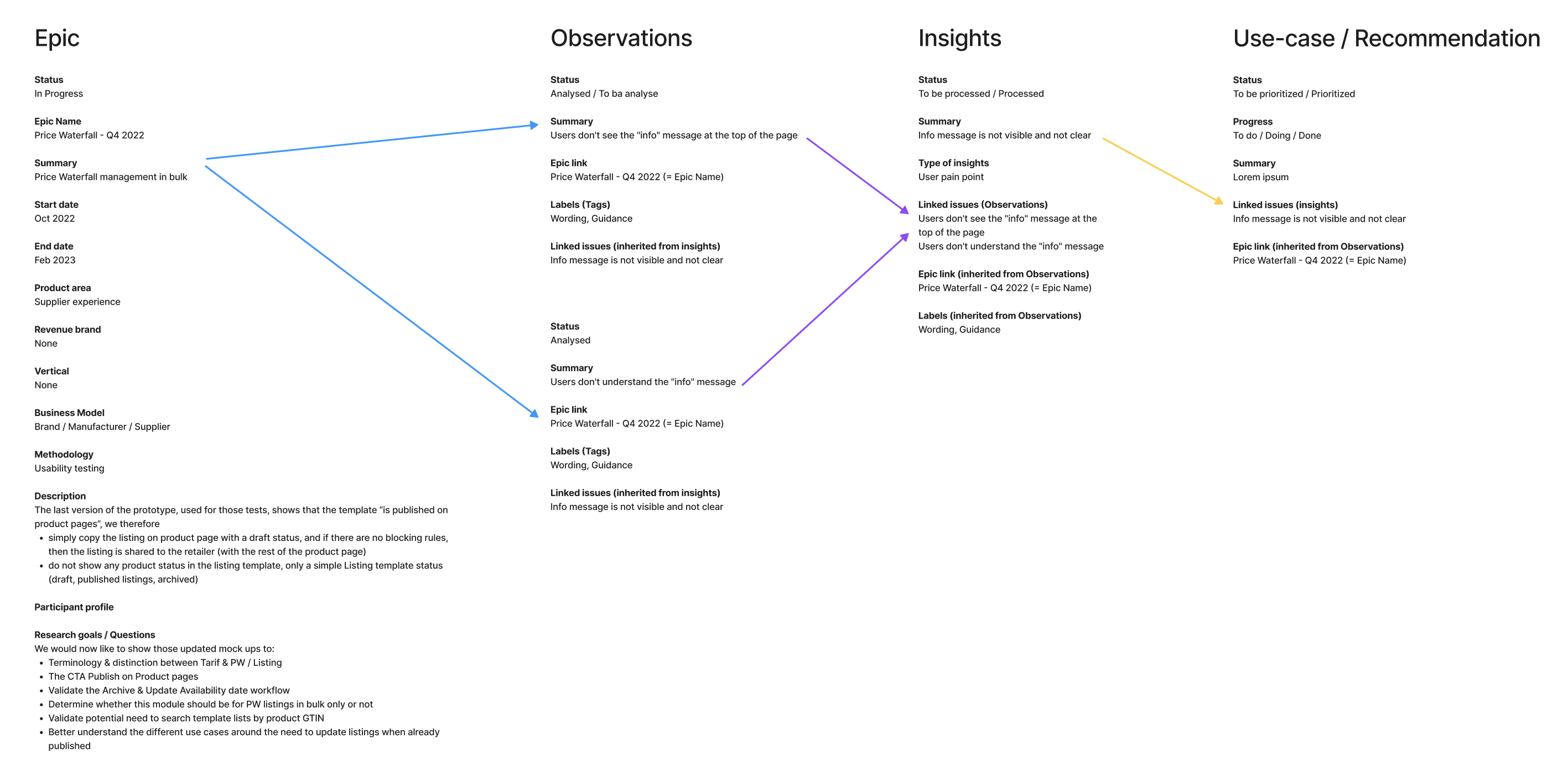
- No shared research repository
- No shared design pattern
- No established rituals with Product and Engineering
The objective was to rebuild a self-sustaining and autonomous design function, not only replace roles.
Key Decisions
Hiring Strategy
Recruited one Lead Designer and two junior designers.
Objective: create internal standards and long-term autonomy rather than short-term senior output.
DesignOps Foundations
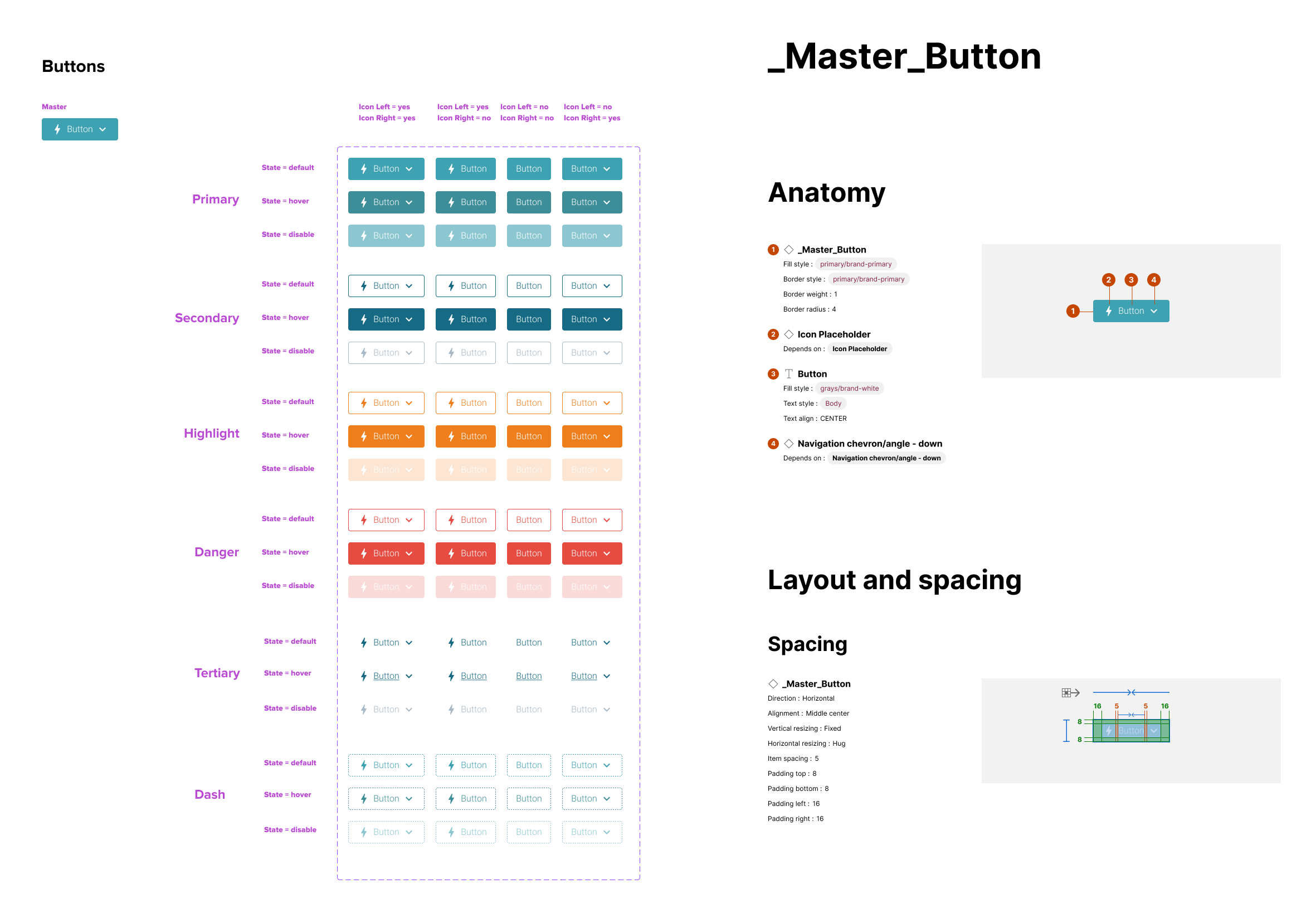
Built onboarding framework, UI library, and research repository during the hiring phase.
Research artifacts were embedded in Jira using Atomic Research structure,
aligning with existing Product & Engineering workflows.
Cross-Country Design Review
Introduced a weekly structured design review across France, Portugal, and US teams.
Created visibility, reduced duplication, and improved documentation standards.
Outcomes
-
4
Designers onboarded in 12 months
-
−30%
Ramp-up time vs benchmark
-
−40%
Research duplication
The rebuilt design function operated with shared standards,
integrated research workflows, and cross-country visibility.
Infrastructure built early accelerated onboarding and reduced coordination overhead.